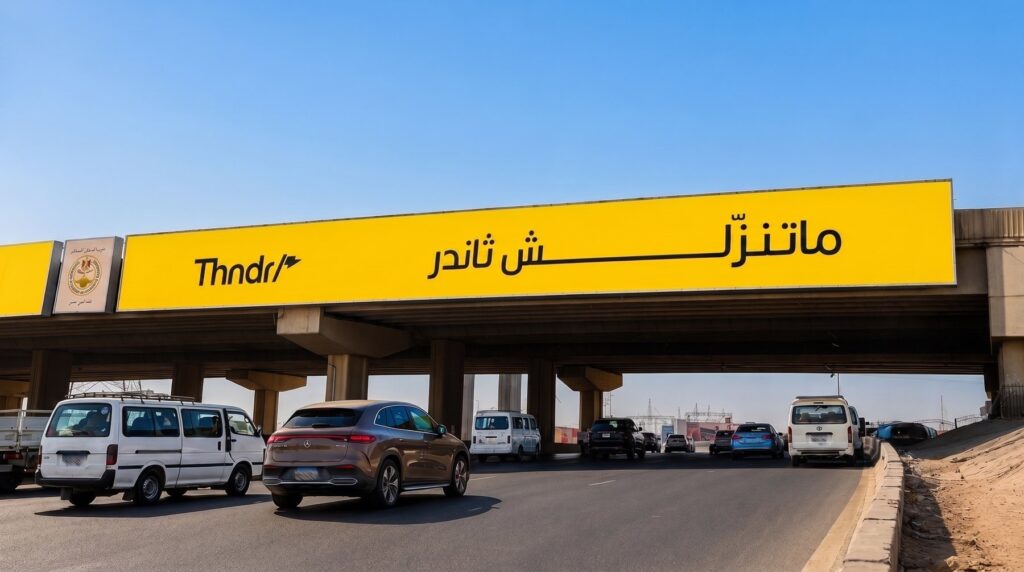
We left a sentence unfinished on the busiest road in the country during peak season asking people to not download our app.
Here’s why.
Thndr is made for everyone, but not everyone is made for Thndr.
Thndr launched in 2020 to change who gets to own a share. No fees, no commission, no minimum. Nothing between you and the market but the phone already in your hand.
It worked, in the way we most wanted it to. People who couldn’t have opened a brokerage account a few years earlier opened one in an afternoon. Security guards. Drivers. Students.
And a lot of people didn’t.
Not because they hadn’t heard of us. They’d seen the ads. They’d read the explainers, watched the videos, sat through a friend explaining what Thndr is. Some downloaded the app, looked around and closed it. Then they went back to the drawer, gold from a jeweler, and savings accounts that quietly lose to inflation every year.
We’d solved the problem we could see. Fees, minimums and access were real barriers, and we took them down. So why did so many people stop at the door?
The barrier underneath all of them is that doing something new with your money means believing your life could look different from how it looks today. Plenty of people don’t believe that, or don’t want the trouble of acting on it. We’re not trying to change their minds. We’re looking for the people who already feel it.
But we’d spent six years talking to everyone. Talking to everyone means saying nothing to anyone in particular. So we decided to say something in particular.
What “Thndr isn’t for everyone” actually means
The filter isn’t money. It was never money and it still isn’t. There’s no minimum to start. It isn’t knowledge either. A brand whose whole output is educational content can’t turn around and ask for expertise at the door.
The filter is appetite. Thndr is built for the person who wants more out of their life than they’re getting, and is willing to try something unfamiliar to get it. Anyone can be an investor. Thndr is for the curious people, the go-getters, the people who challenge the norm to do more with their lives.
That’s a harder thing to fit on a billboard than “investing for all.”
We paid to tell people not to download our app
Every summer Cairo empties north. From Thursday afternoon the highway to the North Coast fills with cars full of families and coolers and four hours of nothing to look at but the road and the boards along it. For one stretch of the year, the most restless people in the country are sitting still, in a car, thinking about the life they want to be living.
So we bought the road. Seven locations between Cairo and the North Coast, 46 faces, running July through September, with one site held through the end of October. The estimate we were working from: around 575,000 unique cars would pass those seven locations, and each one would pass them an average of 17 times.
Then came the decision of what we’d actually say with our billboards. A product push seemed obvious. There was a real argument for it. This was the biggest media buy of the year. We can’t spend all of that on a brand line and say nothing about our best-in-market savings product or our gold offering, right?
And underneath the media argument was a bigger objection: most of the room didn’t want to say the line at all.
“Of course we won’t say that.”
“It’s the opposite of what we tell people.”
“Who doesn’t want more money?”
That last question was meant as an objection. It turned out to be the campaign.
Because the answer is: almost nobody. Which is exactly why the sentence works. “If you don’t want to make more money” is a filter that nearly everyone passes. The line only stings for as long as it takes to finish it, and then it stops being a rejection and starts being an invitation.
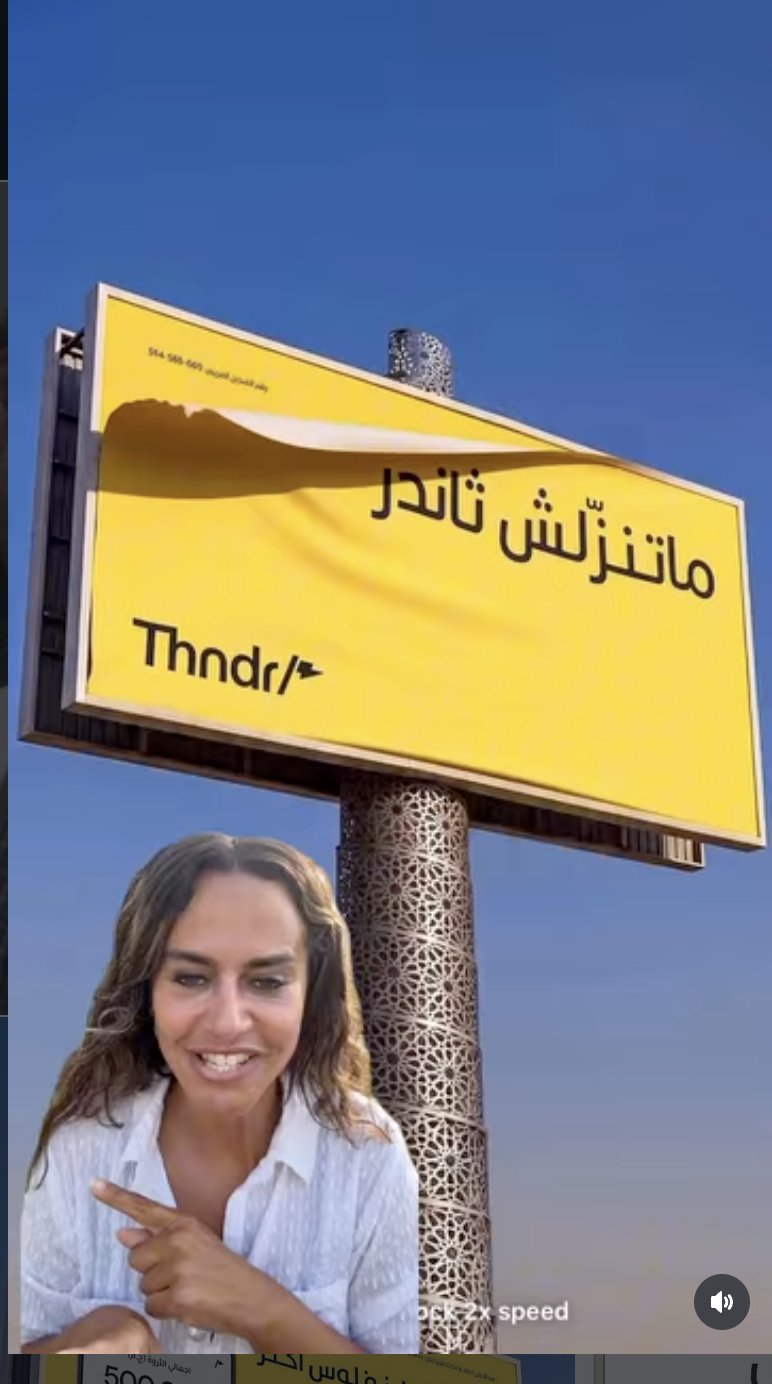
So the brief collapsed to its smallest possible form. Thndr yellow. Two words. No product, no offer, no explanation. And a second phase, bought and booked before the first board ever went up, to finish the sentence.
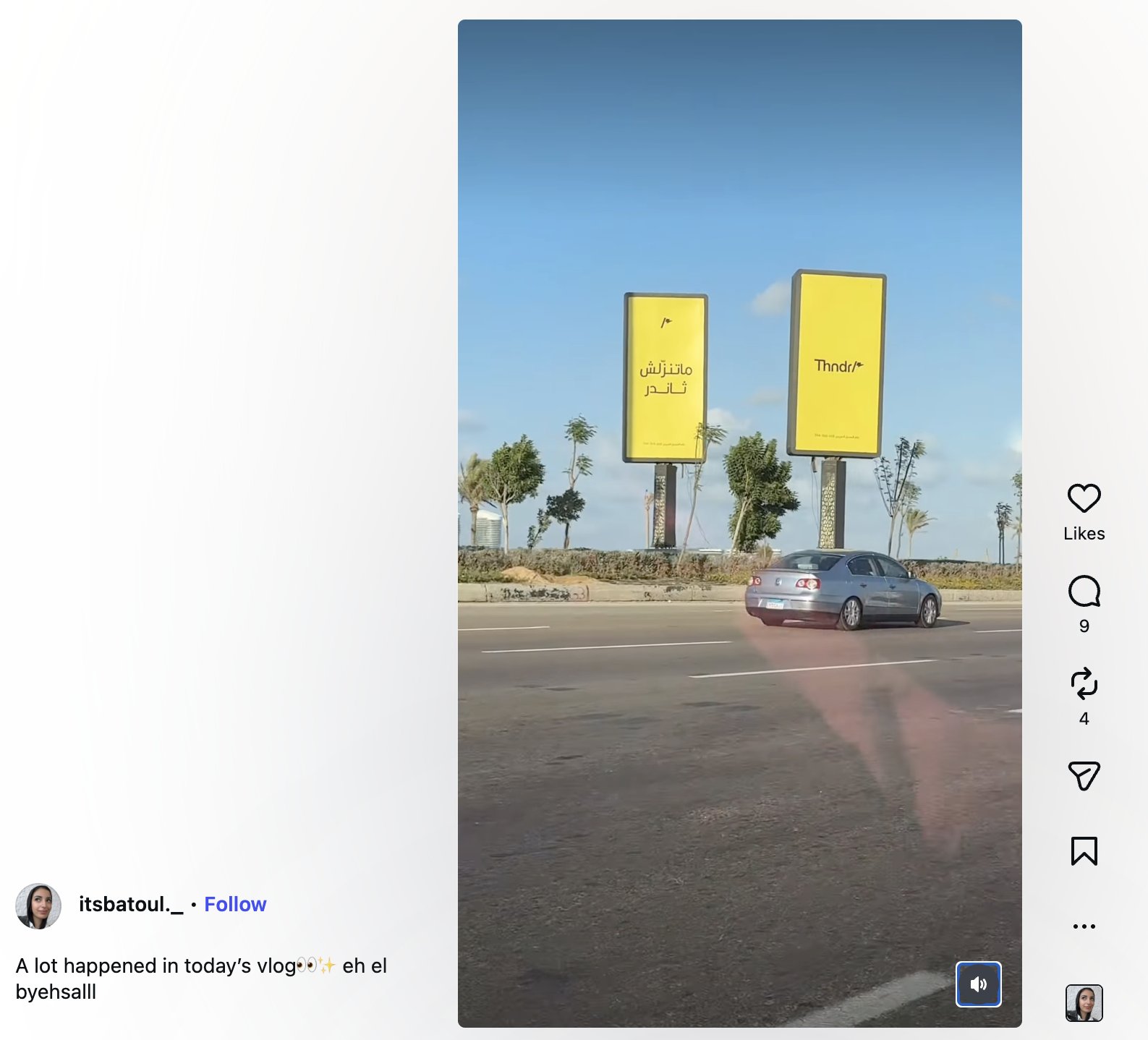
Ten days of saying nothing. The boards went up on 21 July. The sentence stayed unfinished until 31 July.
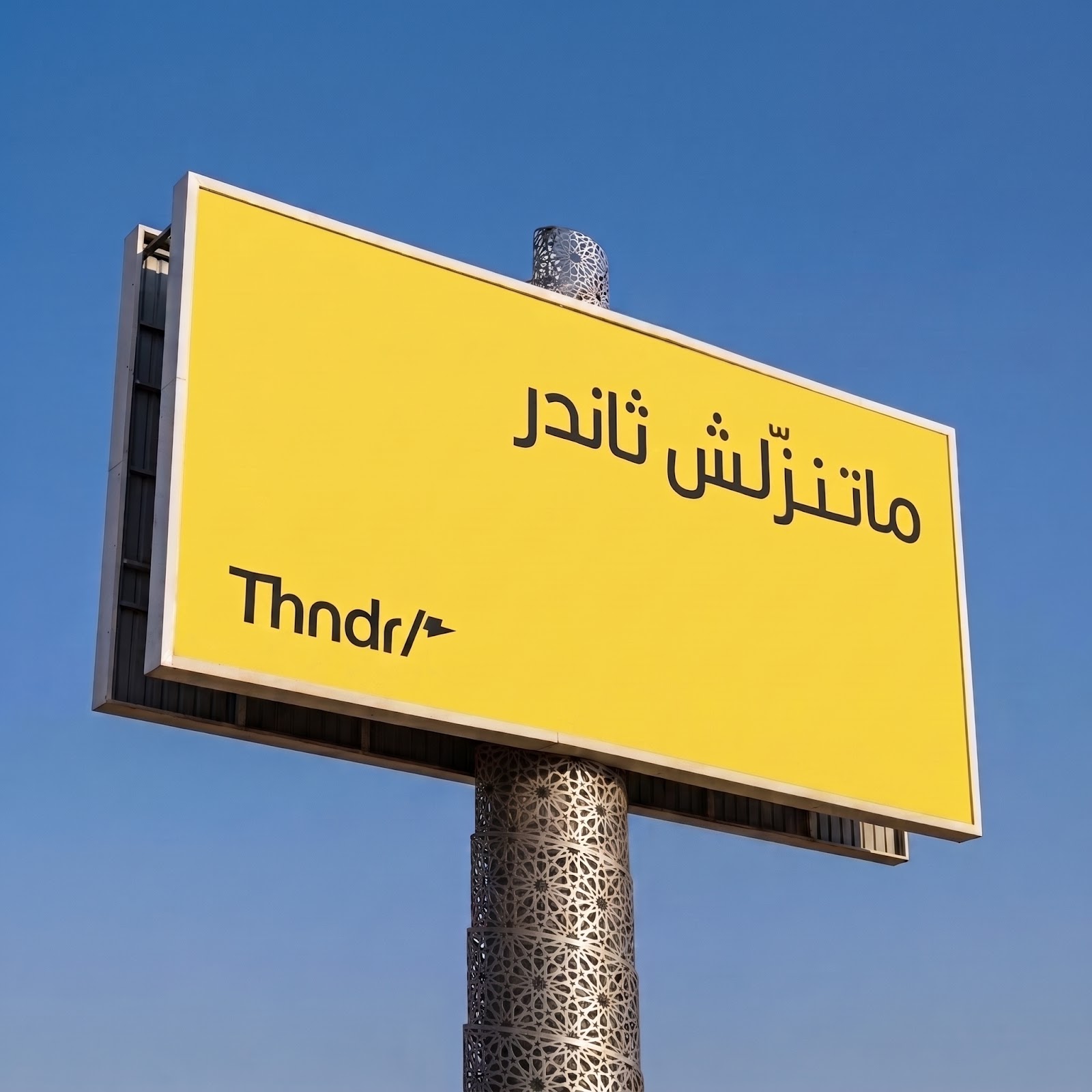
متنزلش ثاندر
Don’t download Thndr
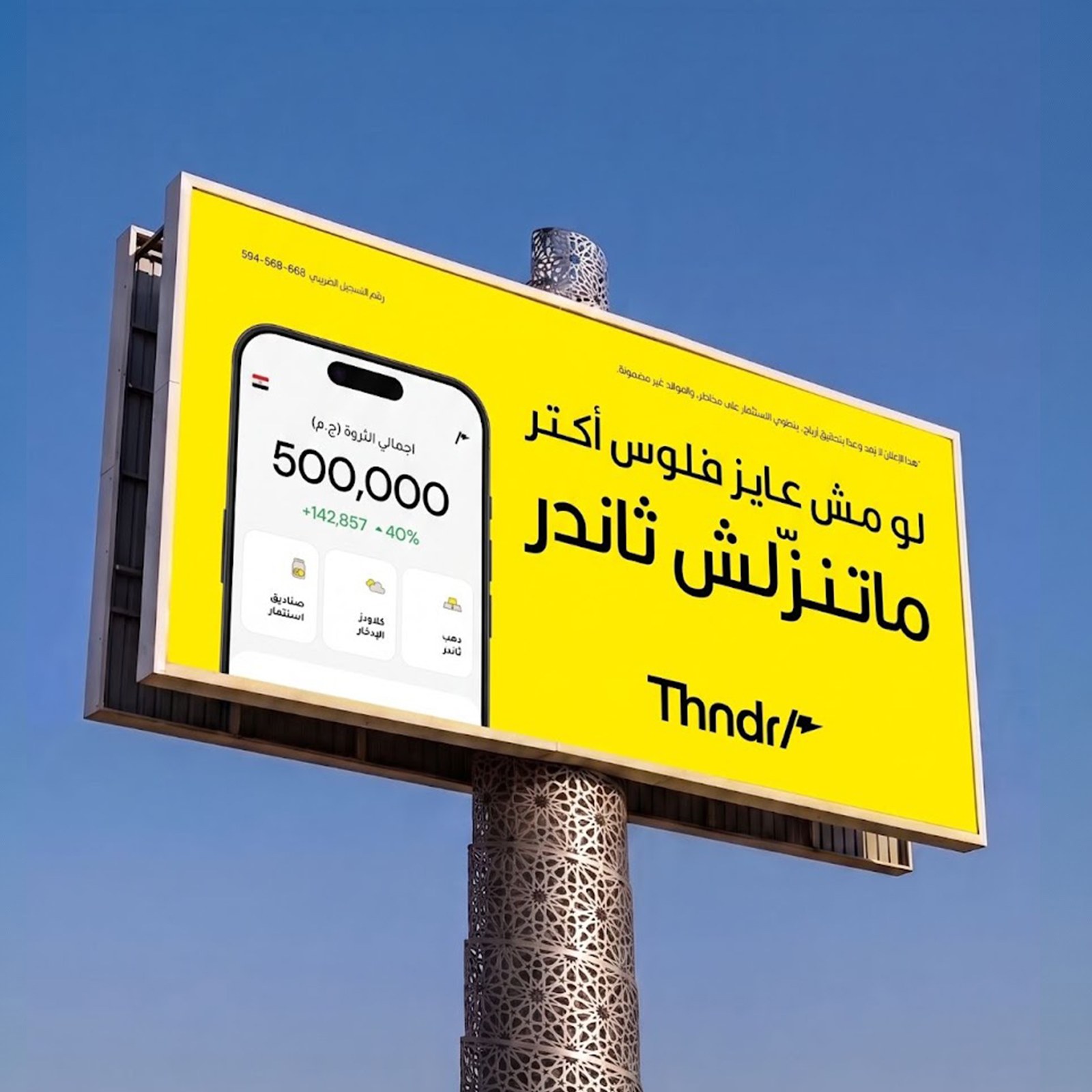
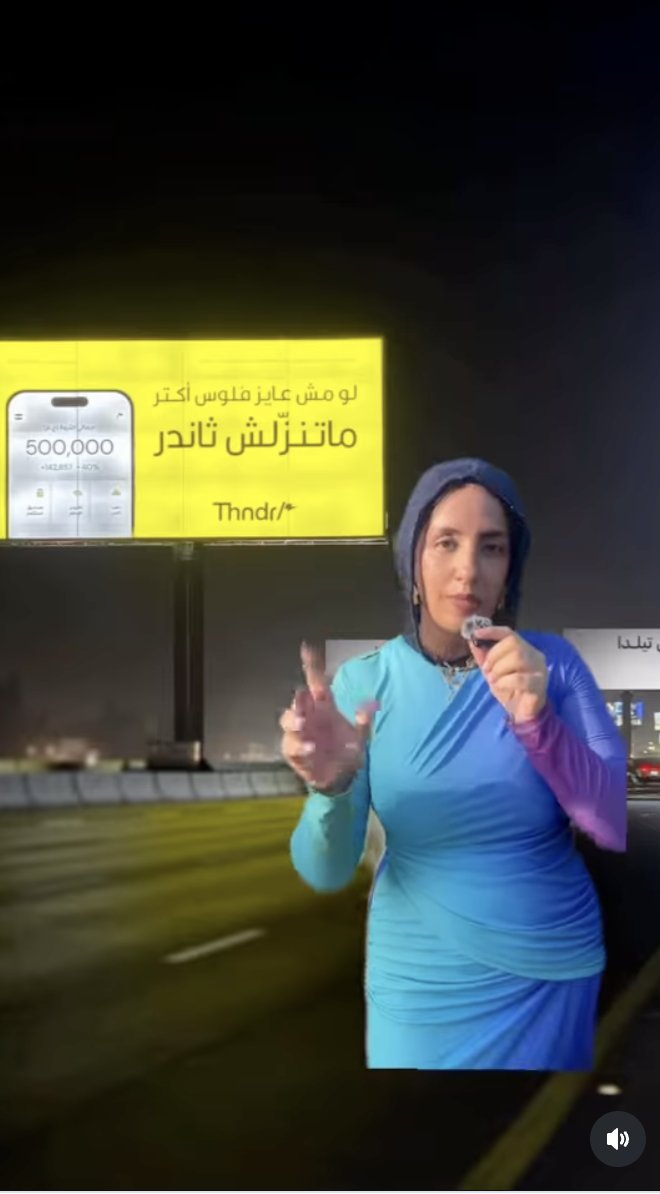
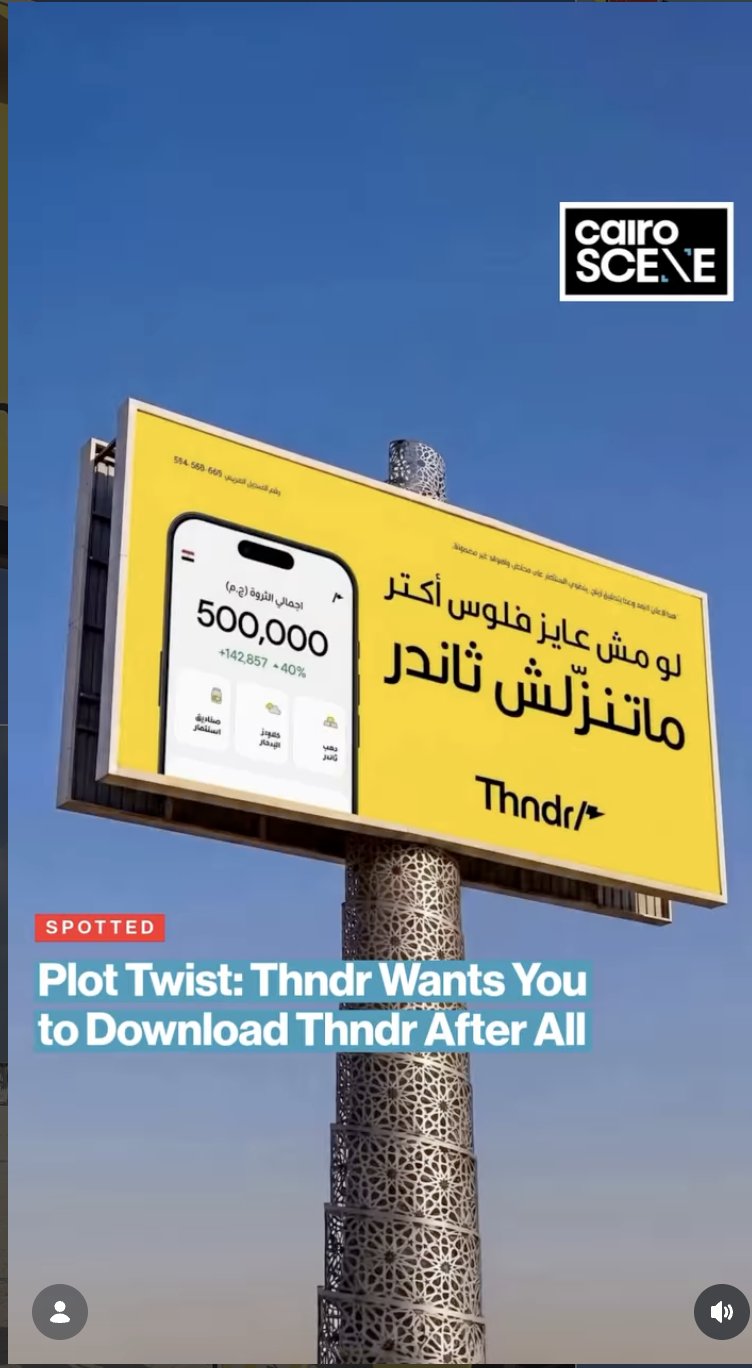
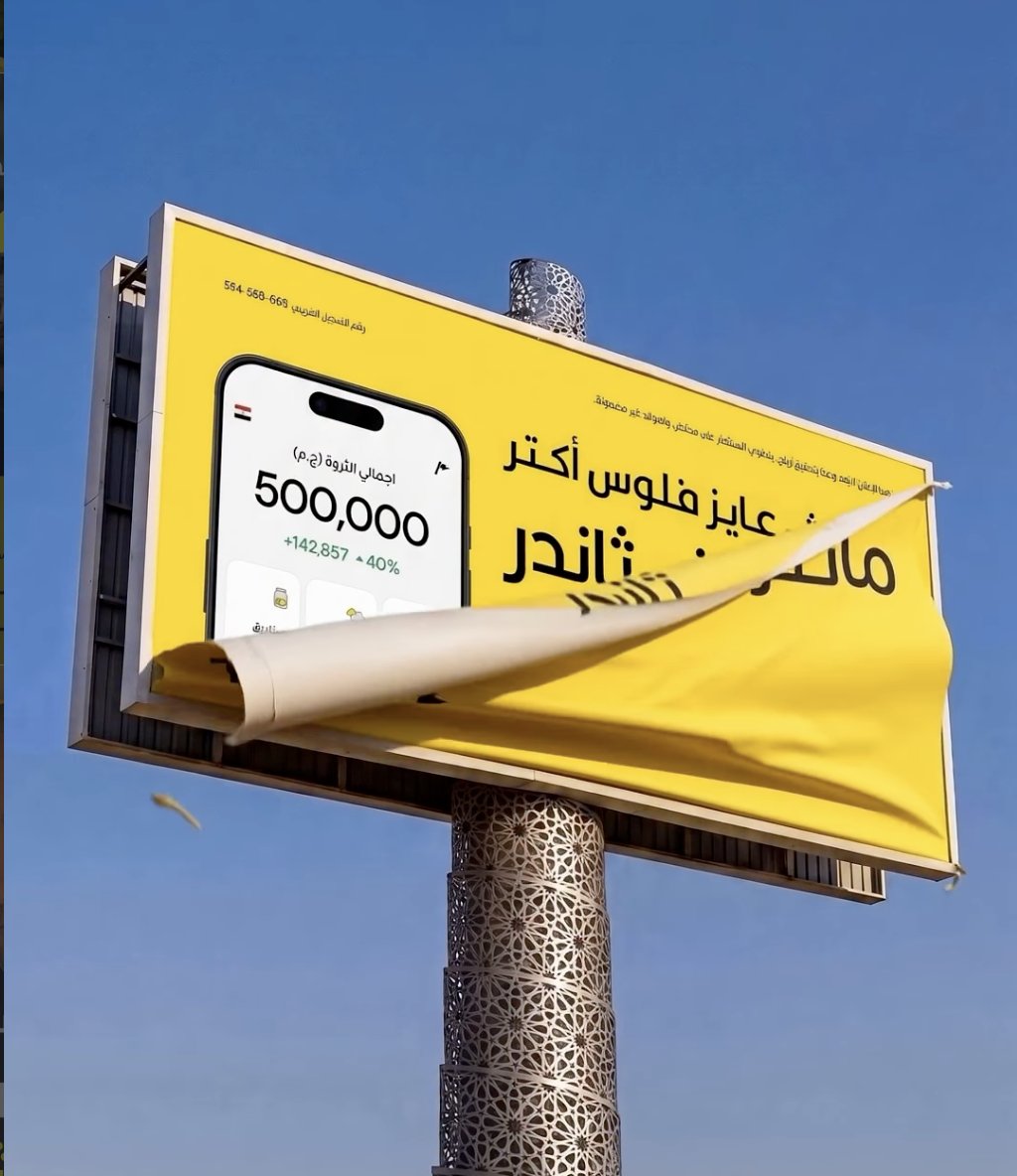
لو مش عايز فلوس أكتر متنزلش ثاندر
If you don’t want to make more money, don’t download Thndr
The hard part of a campaign like this isn’t running it. It’s the silence afterwards, while a country decides what you meant.
We’d agreed in advance to explain nothing. No press release, no clarifying social content, nobody from the team dropping into a comment section to say wait for it. The silence wasn’t a gap in the plan. It was the plan.
Silence from Thndr didn’t mean silence everywhere. We ran the two words as a three-part teaser on our own channels the same day the boards went up, and then stopped talking. That teaser did 1,216,340 views and drew 426 comments. People argued with each other about what we meant, came back to check the argument, and that arguing is what pushed the post into more feeds than we bought.
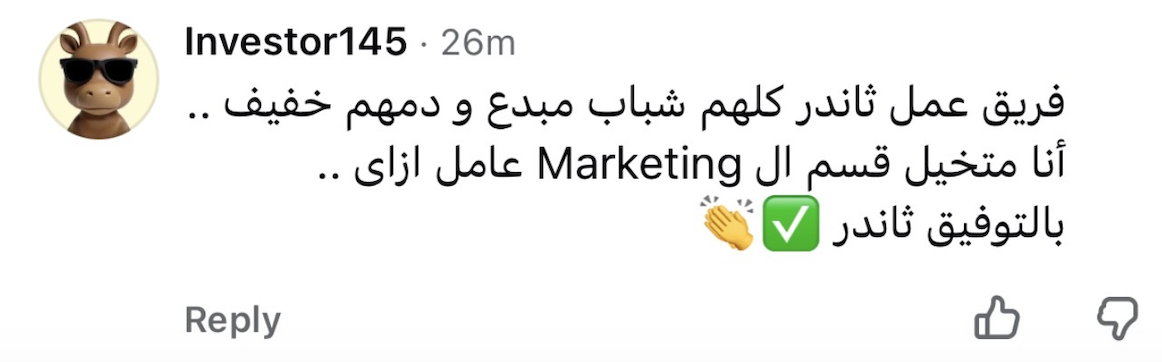

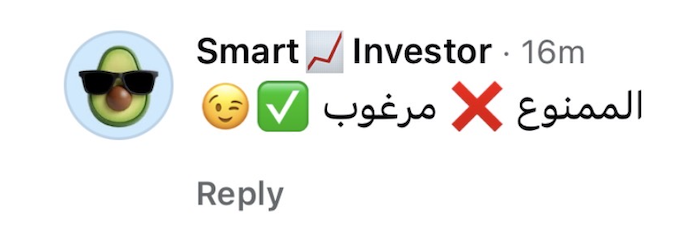
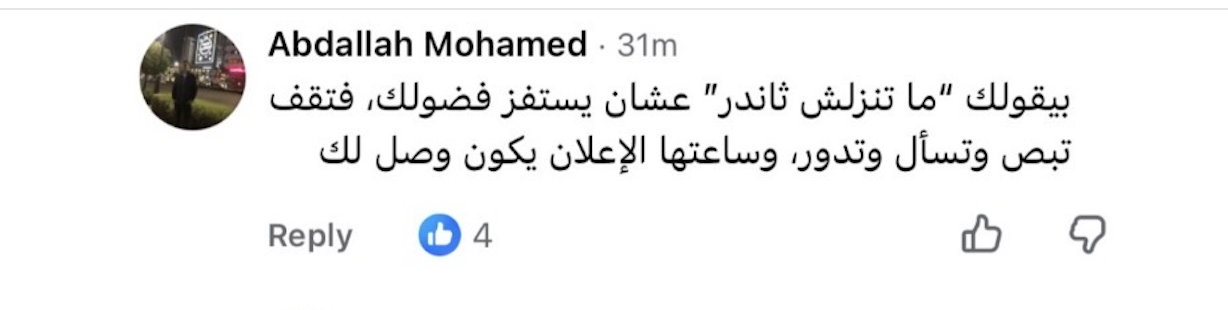
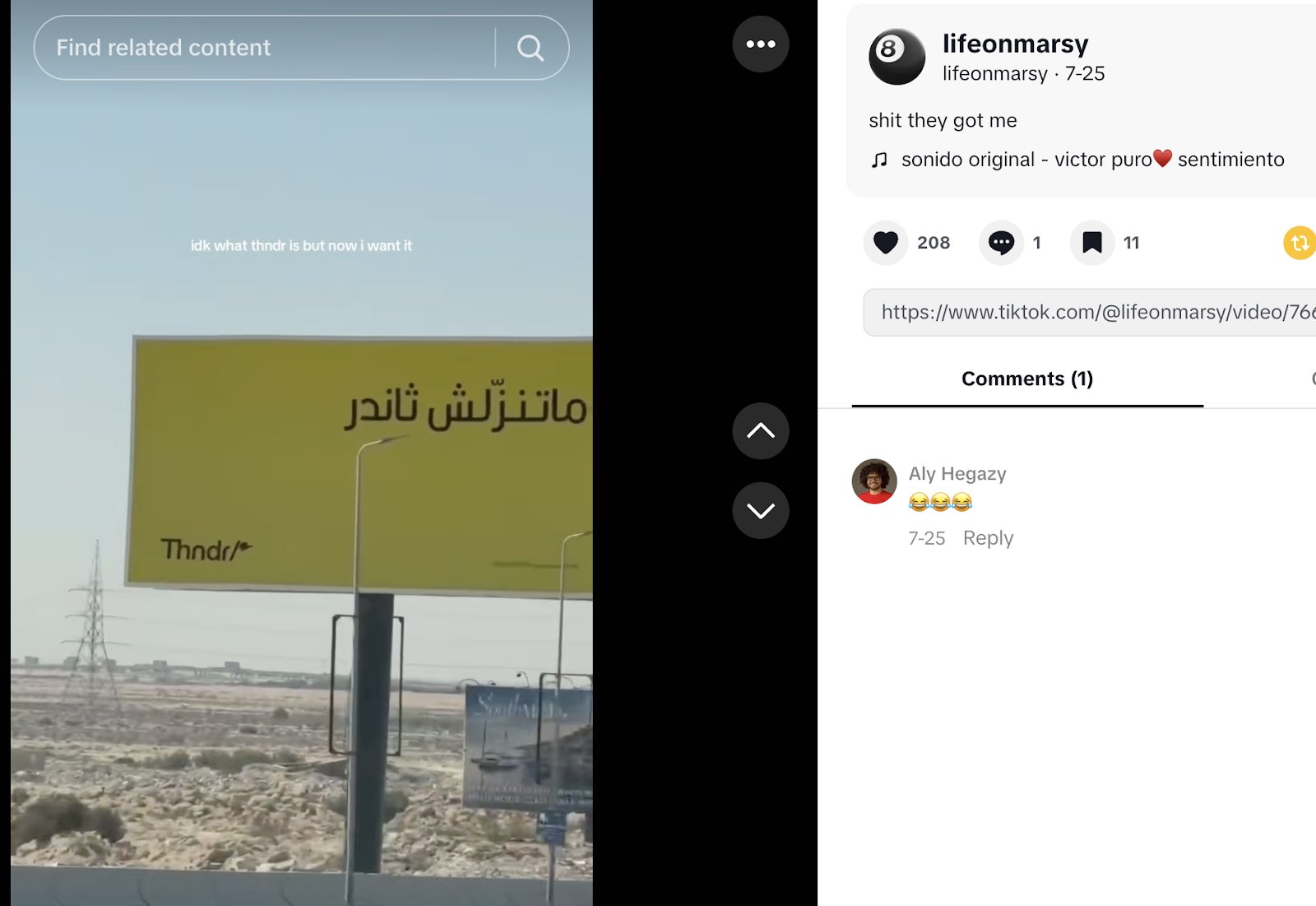
We also worked with creators and publications who put the question in front of their own audiences asking what the boards were about, not answering it.
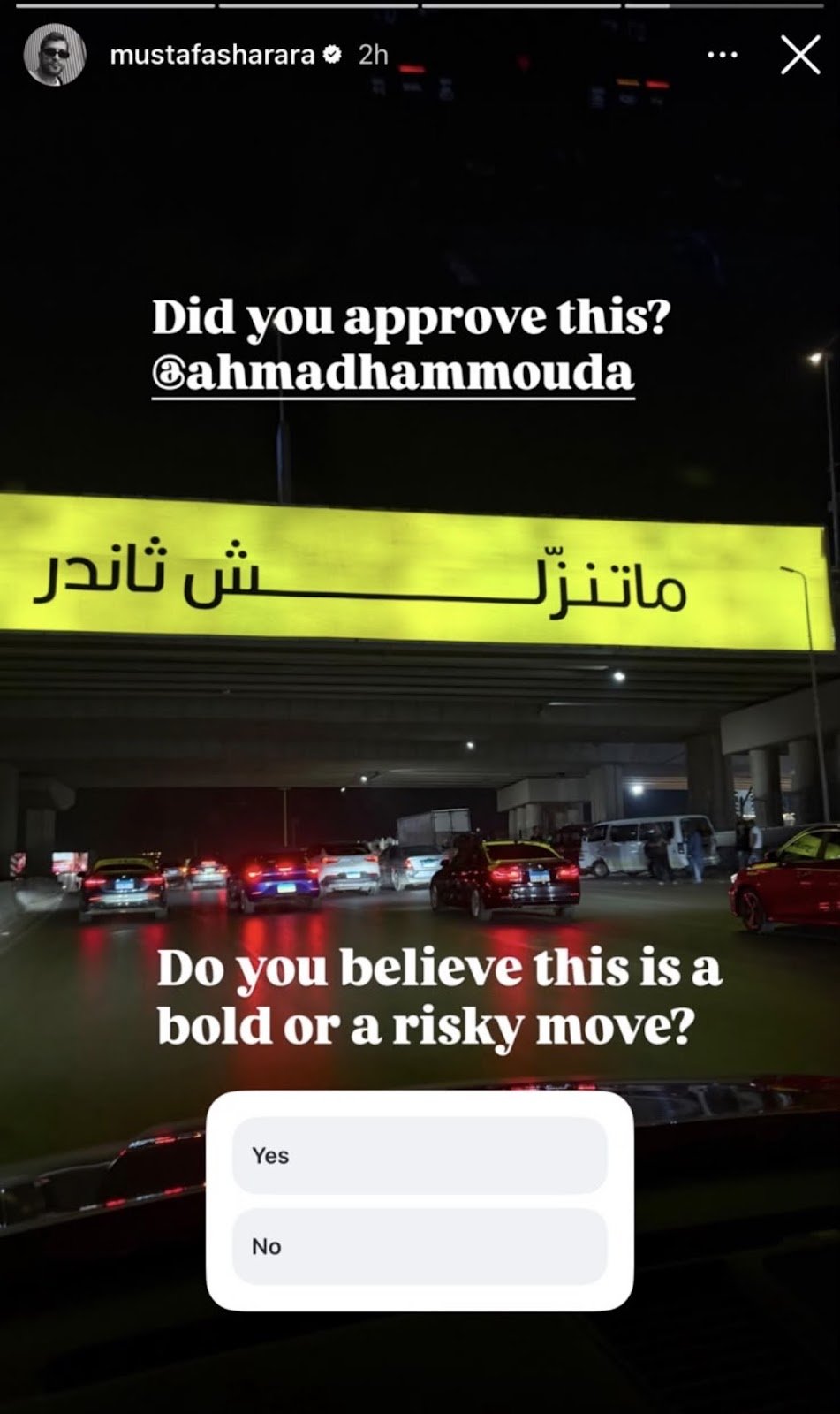
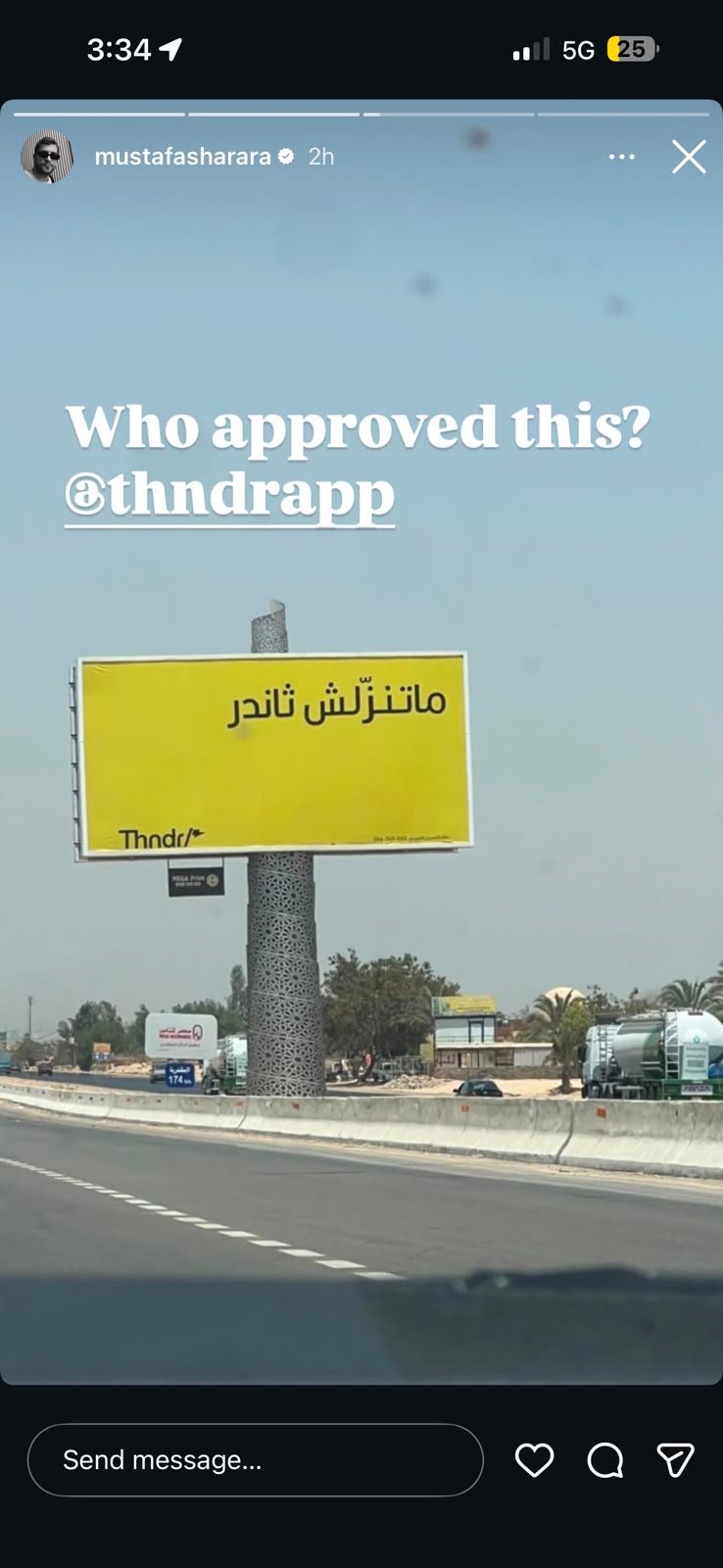
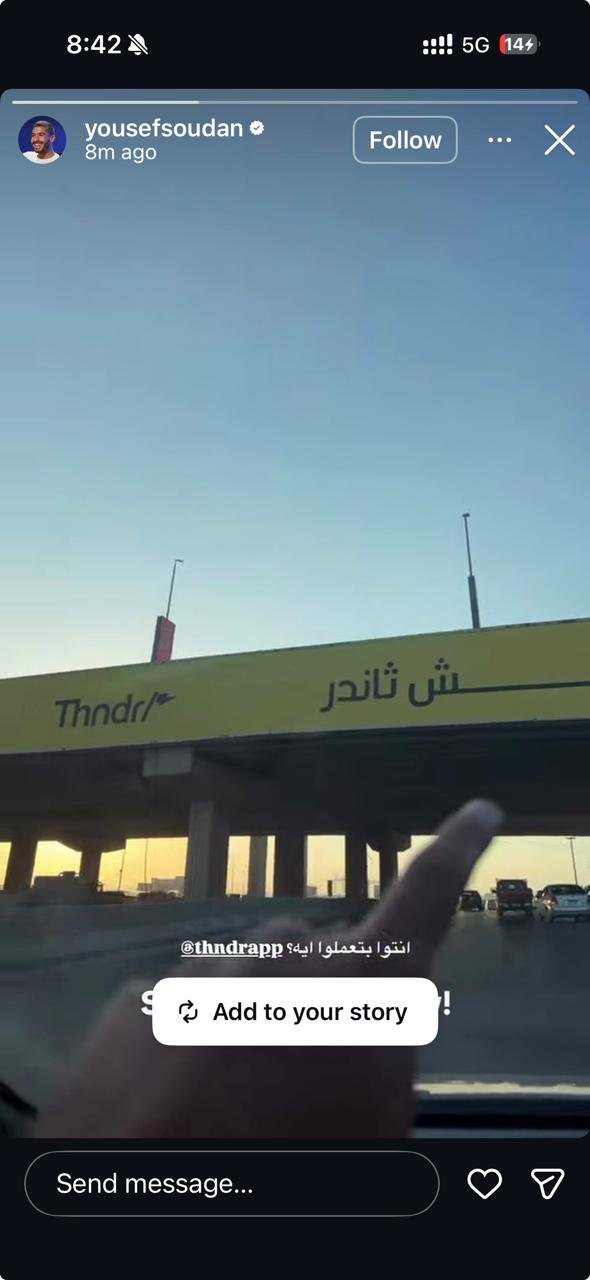
What happened in the gap
The ten days were the loudest stretch of the campaign, and almost none of it was us.
A single TikTok from an advertising commentary page did over 750,000 views on its own. Across the campaign, 28 organic TikTok posts carried about 1.5M views. Everyone had a theory to share about what the unfinished sentence meant.
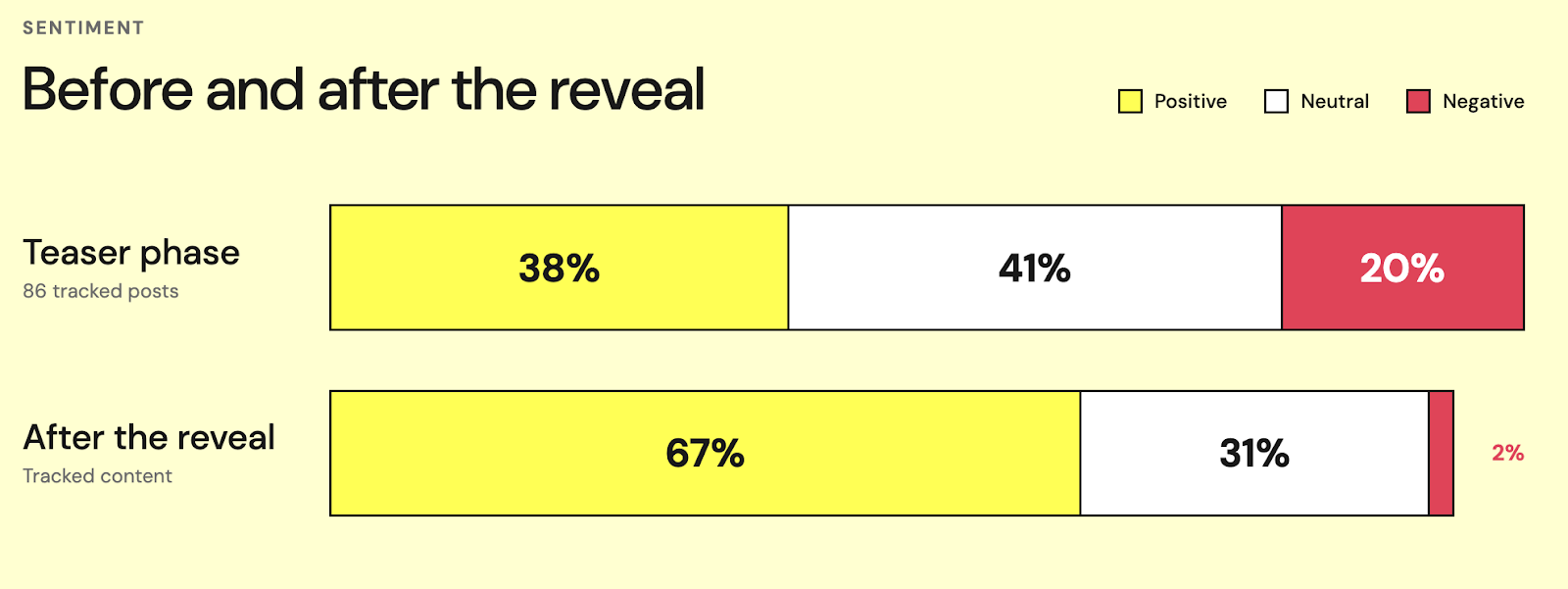
Sentiment in the teaser phase, across 86 tracked posts: 38% positive, 41% neutral, 20% negative. One in five people who talked about us in that window didn’t like it. We’d budgeted for worse.
And signups moved on a day they had no business moving. Friday 24 July, the first weekend after the boards went up, ran 25% above our July weekend average.
Finishing the sentence
On 31 July we completed the line, and the mood turned over.
Sentiment across content tracked after the reveal: 67% positive, 31% neutral, 2% negative. The negative share went from one in five to one in fifty. Nobody’s mind was changed by an argument. They just got the second half of a sentence.
The reveal post on our own channels did 302,074 views and 4,430 engagements. A quarter of the teaser’s reach and double its engagement, which is the trade you’d expect when a question becomes an answer.
Signups moved again: We saw a 24% day-on-day uptick on the 31st of July that kept on climbing into August.
A billboard can create buzz. It can’t tell a story.
The other half of the campaign was always going to be a film, and the film had one job: explain why a company would tell you to stay away, without taking any of it back.
The concept our in-house studio landed on was to point the camera at ourselves. A brainstorm. The arguing, the bad ideas, the moment someone says of course we won’t say that. Real team members in our own office.
The form is the argument. A film where a CEO looks down the lens and says we believe in ambition is just a claim, and claims are cheap. A film where you watch a company nearly talk itself out of something and then do it anyway is evidence. We wanted the second one, because the whole campaign is a bet that people can tell the difference.
Ahmad Hammouda, our co-founder and CEO, says it without decoration:
We all want to make more money, but those who want to do something put in the work to make it happen. Thndr was built for those who want to learn more, who have curiosity, who think differently. It’s more than about making money, it’s about doing more in life.
The film was written, storyboarded and directed by our in-house creative studio, and produced with everyone production house.
It went up on 8 August and became the highest-engagement post of the campaign on every platform we put it on: 207,126 views, 9,788 engagements, 2,300 shares, more than 20 story reposts, and 824 new Instagram followers from that single post.
A horizontal, long-form film has no algorithmic support on Instagram. It doesn’t get served; it gets chosen. People watched it because they wanted to.
The numbers
Social media. 64% of the views came from content we didn’t post. And word of mouth generated almost 50k engagements. Paid and earned media together came in at over 1.5 million views. Our Instagram community had its strongest run of the year. Total community growth across the campaign window came in at nearly 24,100.
Search interest. Google Trends put branded search for Thndr at 100 in mid-August, up from a low of around 40 in early July, climbing from the teaser onward. It was the highest point of the year, and it built gradually rather than spiking and dropping inside two weeks.
What it did to the business. Signups had been climbing gradually from 8 July on increased ad spend. August finished almost 80% above July with 12 days above the daily average and no single-day spike anywhere in it. A broad lift with no spike is what brand salience looks like; a one-off offer produces the opposite shape.
The billboards are going down soon. The question underneath them isn’t going anywhere.
Do you want more than you’ve got right now? If you don’t, we meant it, don’t download Thndr. If you do, that’s the only qualification we’ve ever asked for.
Investing involves risk, including possible loss of capital. Nothing in this article is investment advice or a recommendation to buy or sell any security. Thndr is licensed and regulated by the FRA.